
Koreans wake up very early on January 1 to watch the first sunrise of the year, often driving to the coast or hiking up a hill in the dark winter cold. It is more than just a photo moment; it is a small New Year ritual shared with family, partners, friends, or even a dog, with everyone quietly making wishes as the sun appears.
Why Koreans greet the first sunrise
On January 1, the solar New Year called Sinjeong, many Koreans believe that watching the first sunrise helps them start the year with good luck and a clear mind. As the sun slowly rises above the sea or mountains, people make personal wishes for health, success, love, or simply a calmer, happier year.
The moment feels like pressing a reset button after a busy and sometimes stressful year. Even though hundreds of people may stand together, each person is having a private conversation with the new year, thinking about dreams, regrets, and fresh goals.
With family, partner, friends… or a dog
For many families, a New Year sunrise trip feels like a winter picnic that just happens before sunrise instead of noon. Parents pour hot tea from a thermos, grandparents wrap blankets around children, and everyone watches the sky change color together.
Couples like sunrise dates because struggling through the cold, dark morning together becomes a special shared story. Friends and solo travelers bring cameras, tripods, or small speakers for quiet music, and more people now bring their dogs in warm jackets to the beach or coastal paths to greet the first day of the year.
Tteokguk: the first bowl of the year
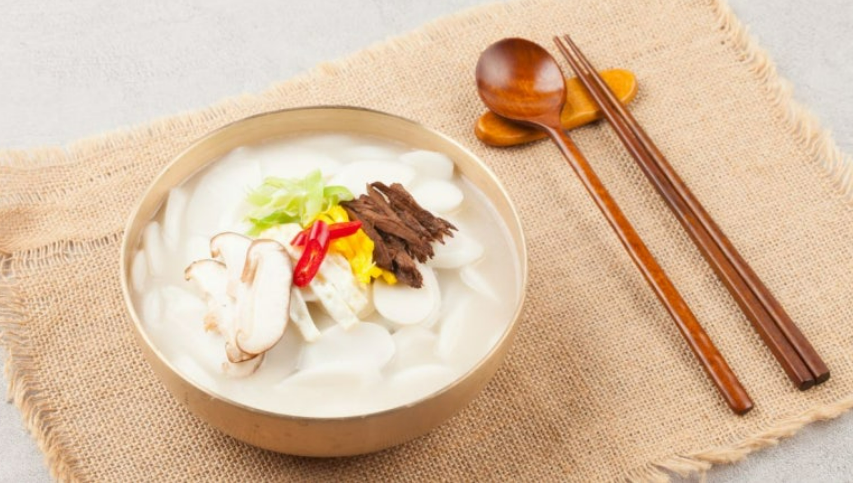
After watching the sunrise, many Koreans eat tteokguk, a clear soup with thinly sliced rice cakes that is strongly tied to New Year traditions. Eating tteokguk on New Year’s Day is believed to bring good fortune and, in a traditional sense, to “add one year” to your age.
The white color of the rice cakes symbolizes purity and a clean start, while their round, coin‑like shape represents the sun and wishes for prosperity. Because of this, Koreans sometimes joke, “How many bowls of tteokguk have you eaten?” as a playful way of asking, “How old are you?”
Sunrise culture in Jeju’s south
Jeju Island is one of Korea’s most popular places for New Year sunrises thanks to wide sea horizons and dramatic volcanic scenery. Seogwipo and the southern coast offer a softer, often less crowded atmosphere than big‑city spots, with a mix of beaches, harbors, and small peaks.
On January 1, sunrise in Jeju is usually around 7:30–7:40 am, so arriving 30–40 minutes early is important if you want to enjoy the full color change in the sky. Below are sunrise spots that work well if you stay in Seogwipo or the south, including the famous Seongsan Ilchulbong and some lighter, more local options.
1. Seongsan Ilchulbong (Sunrise Peak)
Seongsan Ilchulbong is Jeju’s iconic sunrise crater and a UNESCO World Heritage site, famous across Korea for its dramatic outlook over the ocean. From the top, you can see the round volcanic bowl and the sun rising directly over the sea, making it a classic New Year bucket‑list experience.
- Location: Eastern side of Jeju, reachable from Seogwipo by bus or car.
- Atmosphere: Very busy on January 1, especially during the Seongsan Sunrise Festival with performances and countdown events.
- Hiking time & difficulty: Around 20 minutes of steady stair climbing for most people; short but quite steep, so it feels like a real mini‑hike.
- Tip: Arrive very early for New Year’s morning, as crowds can be heavy and parking fills up quickly.
2. Gwangchigi Beach (foot‑level view of Sunrise Peak)
Gwangchigi Beach is near Seongsan Ilchulbong and offers a flat, sea‑level view with the silhouette of Sunrise Peak in front of you. At low tide, green mossy rocks and tidal flats appear, adding texture to sunrise photos and making the whole scene look otherworldly.
- Atmosphere: More relaxed than the summit and suitable for travelers who prefer not to hike in the dark.
- Best for: Families, people with pets, or anyone who wants to enjoy the sunrise with stable ground under their feet.
3. Ojo Port (Ojo‑pogu)
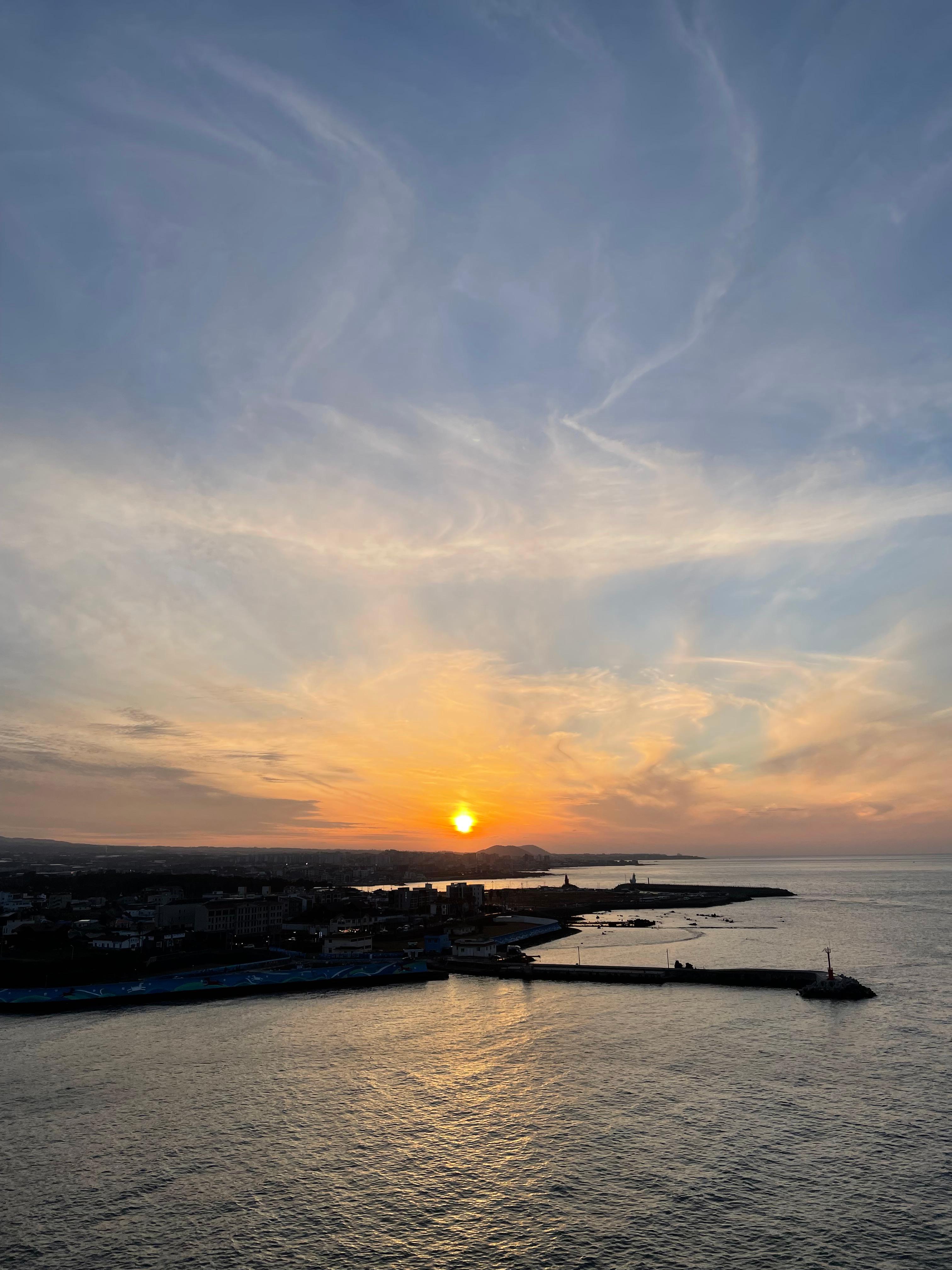
Ojo Port is a small fishing harbor near Seongsan that feels more like a local neighborhood than a tourist site. From the pier and coastal road, you can see boats, open water, and Seongsan Ilchulbong in the distance as the sky brightens.
- Atmosphere: Quiet and everyday; you share the scene with local residents rather than festival crowds.
- Best for: Travelers who enjoy slow walks, simple photos, and a calm morning with their partner, family, or dog.
4. Dusan Peak (local sunrise hill)
Dusan Peak in Seongsan‑eup is sometimes described as a “locals’ sunrise hill,” less famous internationally but valued for its peaceful views. From the top, you can look out over villages and the sea, with plenty of space to sit and watch the sky change.
- Atmosphere: Intimate and quiet; good for journaling, meditation, or small groups sharing their New Year resolutions.
- Trail: More natural than a fully paved tourist path, so wear proper shoes and check conditions in winter.
5. Sagye / Hyeongje Coast in southwest Jeju
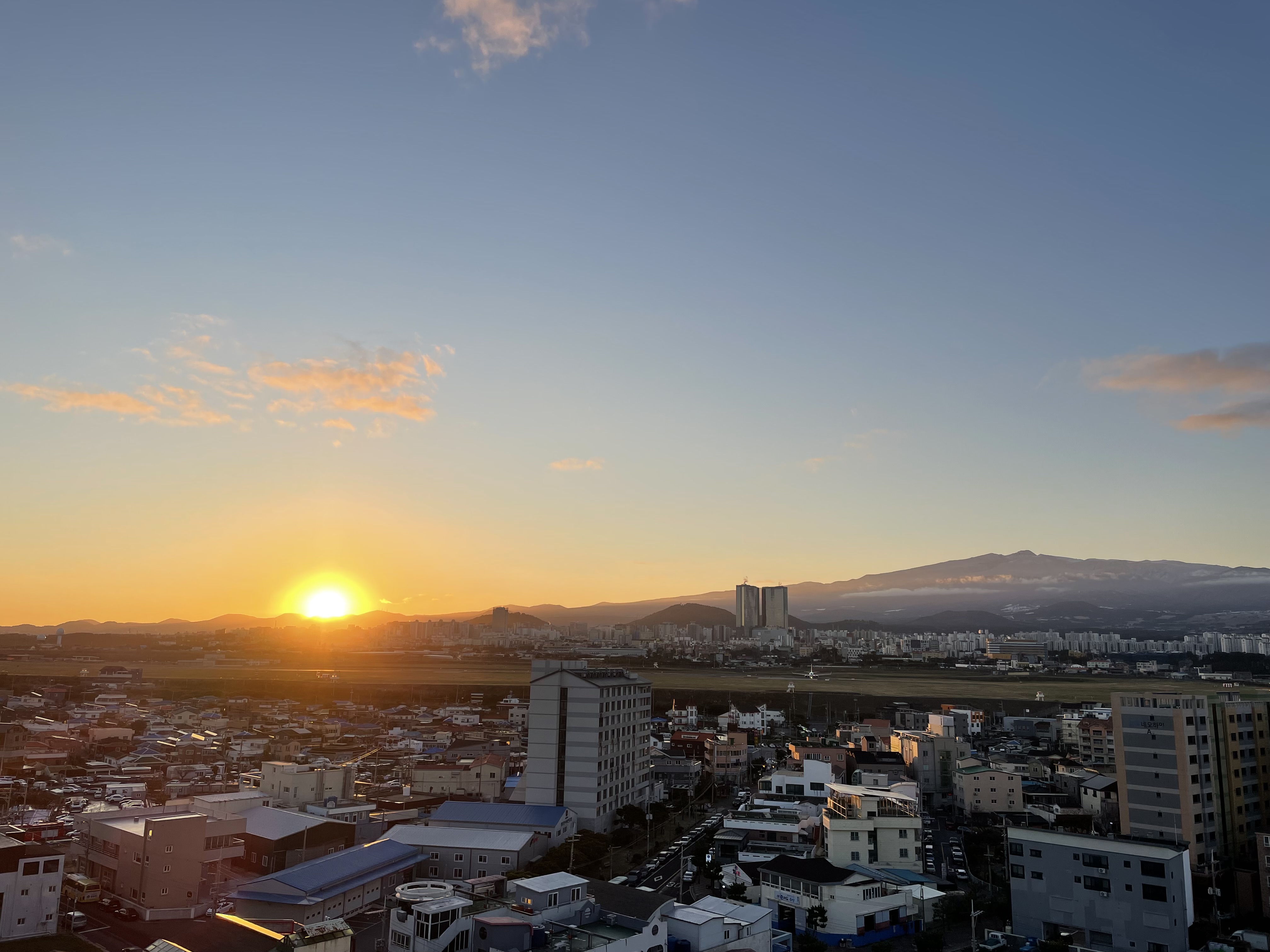
Around Sagye‑ri and the so‑called Hyeongje Coast in southwest Jeju, a seaside road runs along the water with views of the ocean and Sanbangsan Mountain. Although this area is better known for sunsets, in winter the pre‑sunrise pastel colors over the sea can still create a gentle, cinematic start to the year.
- Atmosphere: Relaxed; many people simply park along the road and watch from their cars or take a short walk.
- Best for: Travelers staying near Sanbangsan, Yongmeori Coast, or Moseulpo who prefer a low‑stress sunrise without crossing the island.
6. Seogwipo Harbor & Saeyeongyo Bridge
In central Seogwipo, the harbor and Saeyeongyo Bridge area provide an easy, urban‑coastal way to greet the day. Fishing boats, Saeseom Island, and the curved pedestrian bridge slowly come into view as the sky lightens above the water.
- Atmosphere: Convenient and mild; you can walk from many hotels and guesthouses, then go straight for breakfast or coffee.
- Best for: First‑time visitors without a car, or anyone who wants a gentle sunrise walk instead of a full hike.
7. Soesokkak Estuary & coastal path
Soesokkak, southeast of Seogwipo, is where a clear river flows into the sea, surrounded by dark lava rock and pine forest. At dawn, the light reflects softly on the water and mist, creating a mysterious mood rather than a dramatic “sun ball” rising from the horizon.
- Atmosphere: Very quiet early in the morning, with only water, wind, and birds as background sound.
- Best for: Nature‑lovers and photographers who care more about atmosphere and reflections than a perfect sun‑disk photo.
8. Jungmun Saekdal Beach (for resort guests)
Jungmun Saekdal Beach in the Jungmun Tourist Complex faces mostly south‑west but still offers a beautiful, peaceful dawn by the ocean. Before most people wake up, you can walk down to the sand and listen to the waves while the sky slowly brightens.
- Atmosphere: Calm and slightly luxurious, with resort lights behind you and open sea in front.
- Best for: Couples or solo travelers staying in Jungmun who want a meaningful New Year walk without driving far.

How a visitor can make it meaningful
As a visitor, joining the New Year sunrise tradition in Jeju is a simple way to connect with Korean culture and locals without needing many words. All you need is warm clothing, a chosen spot that matches your style, and a quiet wish to send into the new year as the first light appears.
Afterwards, trying a bowl of tteokguk or even just a hot drink in a café will help you warm up and reflect on your hopes for the year ahead. That mix of cold air, warm soup, and soft morning light often becomes one of the most unforgettable memories from a winter trip to Jeju.


