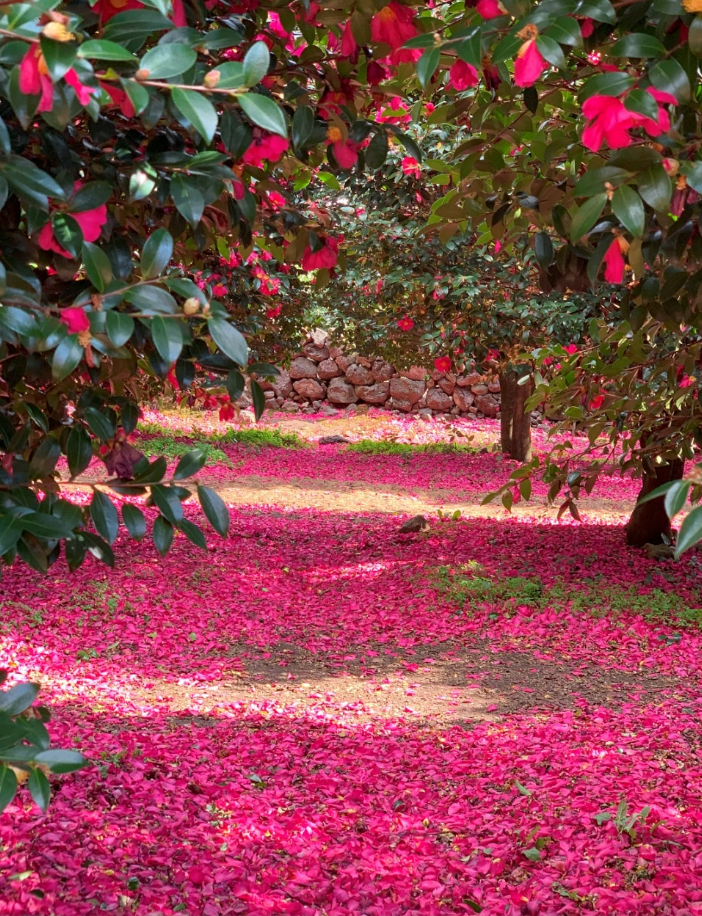
Jeju turns into a red and green wonderland from December to March when camellias explode into color, and the south coast around Seogwipo is one of the best places in Korea to take a truly unforgettable photo with them. Below are 7+ camellia spots that are easy for first‑time visitors, with tips on buses, taxis, size, entrance fees, Google Maps, and creative photo ideas.
When and how to enjoy camellias
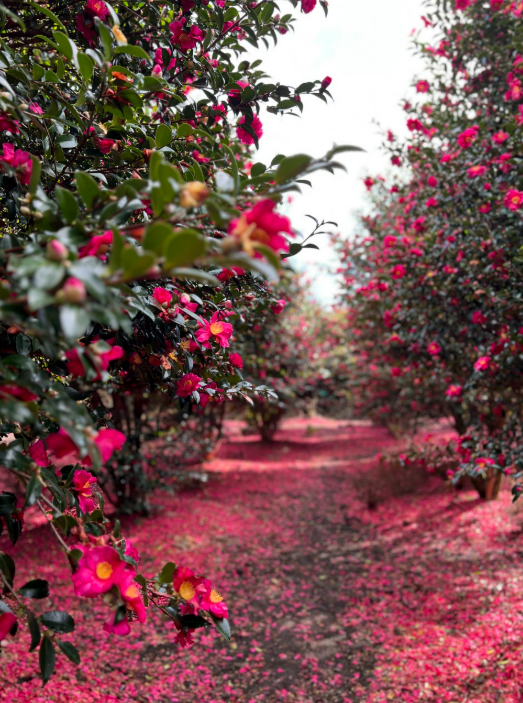
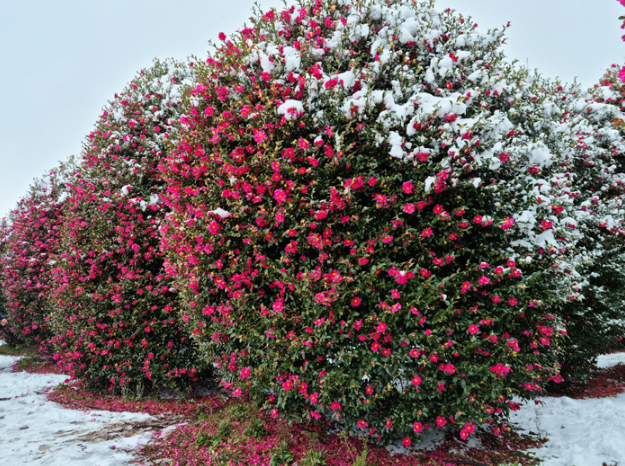
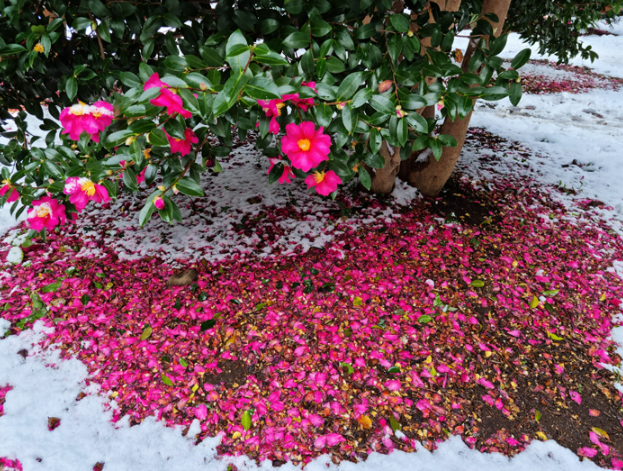
Camellias in Jeju usually bloom from about December through March, with many gardens peaking around January–February. After a light snowfall, the contrast of red flowers and white snow is especially beautiful, so if it has snowed the day before, move this plan to the top of your list.
A fun trick for “life‑shot” photos: place your phone camera very close to the ground to include fallen petals in the foreground and blooming trees in the background. The blurred petals at the bottom of the frame make your photo look almost cinematic, even with a smartphone.
1. Camellia Hill (카멜리아힐)
One of Jeju’s most famous winter photo spots, Camellia Hill is a large private garden with over 6,000 camellia trees and hundreds of varieties arranged in themed sections. From December to March, paths, archways, and small houses are decorated to be “Instagram‑ready,” and you can find countless angles for portraits and couple photos.
- Location (Google Maps): “Camellia Hill” – 166 Byeongak‑ro, Andeok‑myeon, Seogwipo
- Size & vibe: Very large garden; plan at least 1.5–2 hours to walk and shoot.
- Entrance fee: Paid attraction (discount tickets often around 10,000–15,000 KRW via online platforms).
- Bus: From Jeju Airport, bus 182 → transfer to local bus 752‑1 and get off at Camellia Hill stop (about 1 hour+ and some walking).
- Taxi: About 50 minutes from Jeju Airport (~30,000 KRW), 15–20 minutes from Jungmun resort (~10,000 KRW).
Photo tip: Use the narrow paths where trees form a tunnel above your head. If you stand slightly back and have your friend shoot from low angle, the flowers will fill the top of the frame like a ceiling. Visiting on a cloudy day can be even better because the soft light makes skin tones look gentle and colors richer.
2. Jeju Camellia Arboretum (제주동백수목원)
Jeju Camellia Arboretum in Wimi‑ri, Namwon‑eup, is a more natural, forest‑style camellia park and part of the protected Wimi Camellia Habitat. It is home to one of the largest collections of Camellia sasanqua in Korea, so you can walk under tall trees and feel like you are inside a camellia forest, not just a garden.
- Location (Google Maps): “Jeju Camellia Arboretum” – 929‑2 Wimi‑ri, Namwon‑eup, Seogwipo
- Size & vibe: Medium–large; feels more like a quiet forest than a commercial park.
- Entrance fee: Paid, generally cheaper than big private gardens.(Adult : 8,000 KRW)
- Bus: Access via buses toward Namwon/Wimi; use a map app for exact routes from Seogwipo Bus Terminal.
- Taxi: 15–25 minutes from central Seogwipo, convenient if you combine with Soesokkak or Hueree.
Photo tip: Arrive early in the morning after rain or snow. Fallen flowers on dark lava soil create natural “flower carpets.” Put your phone almost on the ground and tilt it slightly upward so petals at your feet blur in front while the forest rises behind.
3. Wimi Camellia Tree Grove (위미 동백나무 군락지)
Next to the arboretum, Wimi Camellia Tree Grove is a historic camellia forest planted over a century ago to protect farmland from sea wind. It is registered as a Jeju Monument and has a slightly wild, mystical atmosphere, especially on foggy winter days.
- Location (Google Maps): “Camellia Forest in Wimi” – around 23‑7, 300‑bun‑gil Wimi‑ri, Namwon‑eup, Seogwipo
- Size & vibe: Compact but dense; you walk through narrow paths tightly surrounded by old trees.
- Entrance fee: Often low or free, depending on the exact section and current management.
- Bus/Taxi: Similar access as the arboretum; easy by taxi from Seogwipo.
Photo tip: Because paths are narrow, shoot portrait‑style photos with a vertical frame. Stand close to the tree trunks and let the background blur. If you travel with a dog, low‑angle shots of the dog walking among fallen red petals can become your cutest memory of Jeju.
4. Hueree Natural Park & Camellia Festival (휴애리 자연생활공원)
Hueree Natural Park in Namwon‑eup is famous for seasonal flower festivals, and in winter it hosts the Hueree Camellia Festival. Camellias are arranged with tangerine trees, mini photo zones, and traditional play areas, making it a fun stop for families and friend groups.
- Location (Google Maps): “Hueree Natural Park” – 256 Silrye‑dong‑ro, Namwon‑eup, Seogwipo
- Size & vibe: Medium; easy walking paths, many designated photo spots.
- Entrance fee: Paid; festival pricing runs through late winter (Adult : 13,000 KRW).
- Bus: Buses from Seogwipo toward Namwon/Soesokkak area stop nearby; check “Hueree Natural Park” in your map app
- Taxi: About 15 minutes from Seogwipo city, so combining with Soesokkak or Wimi works well.
Photo tip: Look for places where camellias and Jeju stone walls appear together. If you sit on the wall and hold a single flower in your hand, or place it on your shoulder, it creates a simple but very Korean winter portrait.

5. Dongbaknang (동백낭)
Dongbaknang is a camellia garden tucked inside a forest area in Seogwipo, and it has recently become a rising “hidden gem” among camellia lovers. The garden is smaller than Camellia Hill but feels more intimate, with cozy paths, swings, and rustic props designed for photos.
- Location (Google Maps): Search “Dongbaknang Jeju” – 956-3 Wimi-ri, Namwon-eup, Seogwipo (exact English POI names vary, so check the one in Seogwipo with camellia photos).
- Size & vibe: Small–medium; good for slow strolling and many portrait shots.
- Entrance fee: Paid, but usually cheaper than the biggest gardens.
Beverages are 3,000KRW, and the price includes the admission fee. (Depending on the season, the admission fee may be charged separately.) - Access: Best by car or taxi from Seogwipo; public bus access is possible but may require walking from the nearest stop.
Photo tip: Use props (doors, frames, swings) but try to include real camellia trees in the background so your photo feels natural, not just like a photo zone. Shooting just after opening time helps you avoid crowds in the frame. You can see the ocean from the rooftop on the second floor, so it is recommended to go up.
6. Sumdo Museum Jeju (숨도 Jeju)
Sumdo Jeju combines a museum, café, and garden in one space, with camellia trees planted among Jeju’s unique black basalt rock. It is not a pure flower park, but the contrast of red flowers, dark stone, and clean architecture creates a stylish, modern photo mood. There is also a museum featuring Jeju wildflowers and orchids.
- Location (Google Maps): “Sumdo Museum Jeju” – 8941 Iljudong‑ro, Seogwipo
- Size & vibe: Small–medium; good for those who enjoy design, coffee, and short walks rather than a full‑day flower park.
- Entrance fee: Museum/café admission or minimum order may apply (Adult : 6,000 KRW).
- Access: Along the main coastal road (Iljudong‑ro), easy by car or taxi exploring the east–south coast.
Photo tip: Try mirror or window reflections from the café: position yourself so camellias appear outside while your reflection overlaps with them. This can create artistic portraits without needing professional equipment.

7. Smaller camellia corners along Jeju Olle Trails
Beyond big parks, parts of Jeju Olle walking routes, especially near Namwon and Wimi, pass by small camellia groves and roadside trees. These are perfect for travelers who prefer casual, free spots instead of ticketed attractions.
- Examples (Google Maps keywords):
- “Namwon Port” → Olle Trail Course 5 inland section toward Wimi.
- Small “Camellia in snow (in Jeju)” pins shared by locals near Seogwipo and Wimi.
- Cost: Free, just your time and energy.
- Access: Use Naver/Google Maps with “Olle 5 Wimi camellia” to find recent pins and photos.
Photo tip: Because these spots are not curated, fallen flowers often stay where they land. After light snow, red petals on white ground and black stone make a natural three‑color composition. Place your phone on the ground, point it slightly upward, and stand just beyond the patch of petals.
Bus vs. taxi: what’s easier for first‑timers?
- Bus:
- Cheapest option and good if you enjoy slow travel.
- Many parks (Camellia Hill, Hueree, Namwon/Wimi area) are reachable with 1 main bus + short walk.
- Use apps like Naver Map or Kakao Map (set language to English) and search the spot name, then tap the bus icon.
- Taxi:
- Ideal if you want to combine 2–3 camellia spots in one day without stress.
- From central Seogwipo, most of these places are 10–30 minutes away by taxi, so sharing with friends keeps costs reasonable.
Extra travel tips for perfect camellia photos
- Check weather after snow: clear weather the day after snow gives the most dramatic look, with clean air and bright colors.
- Wear simple, solid‑color clothes: beige, white, or black outfits help the red camellias stand out more in your photos.
- Go early or late: right after opening or 1–2 hours before closing is best if you hate crowds in the background.trip
- Respect the flowers: avoid picking blooms from trees. Instead, use flowers that already fell to the ground for your creative shots.
If you plan 1–2 big gardens (like Camellia Hill + Hueree or Arboretum + Wimi Grove) and then add one café‑style stop such as Sumdo, you can easily fill a full winter day in south Jeju with red camellias, black stone, and photos that look like they came from a professional shoot.