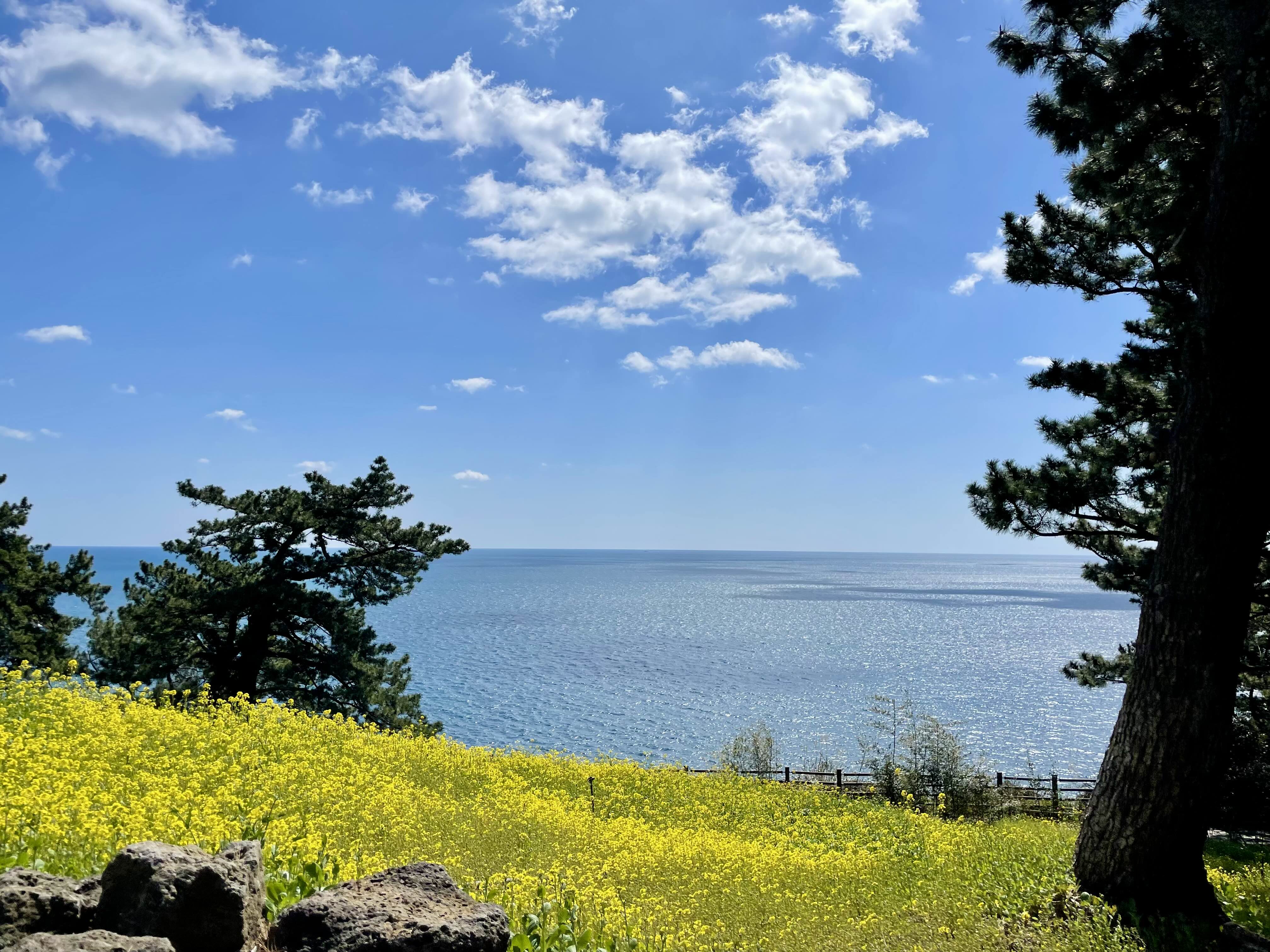
Jeju Canola Flower Photo Spots (January–March): Where and When to See the Yellow Fields
If you visit Jeju Island early in the year — from January to March — you’ll find the island painted in bright yellow. These are the famous Jeju canola flowers (유채꽃), which bloom before spring even arrives. For travelers who love photography, this is one of the most beautiful and romantic times to visit Jeju.
This guide introduces the best months and spots to take canola flower photos, especially around Jeju’s southern coast and Seogwipo, where the earliest blooms appear.
When Do Canola Flowers Bloom in Jeju?
Unlike mainland Korea, Jeju’s mild winter means canola flowers can start blooming as early as mid-January. The full bloom season varies depending on the weather:
- January: Early blooms mainly in south Jeju and near coastal roads, especially around Seogwipo and Sanbangsan.
- February: The peak season begins — wide fields of yellow everywhere, especially near Mt. Sanbang, Seongsan Ilchulbong, and the southern coast.
- March: The most photogenic month. Warm weather, green hills, and yellow flowers together create the perfect spring backdrop.
If you’re planning canola flower photos, February and March are usually the best. However, January offers a unique early-spring look, with fewer tourists and softer light.
Best Photo Spots for Jeju Canola Flowers
1. Sanbangsan Mountain & Yongmeori Coast (South Jeju)
One of the most iconic places for Jeju canola photos. The yellow fields spread beneath Sanbangsan, creating a dramatic background with the mountain and ocean together.
- Best time: Mid-February to late March
- Photo tip: Visit in the morning for soft light and fewer crowds.
2. Seongsan Ilchulbong (East Jeju)
Near the Sunrise Peak area, you’ll find road-side canola fields every spring. The contrast of yellow flowers and black volcanic rock makes stunning photos.
- Best time: Late February to early April
- Good for: Sunrise photographers and family travelers.
3. Gasi-ri Canola Flower Road (Pyoseon area)
This is a less touristy hidden gem. The long stretch of yellow fields looks magical, perfect for couple or solo portraits.
- Best time: March
- Nearby: Pyoseon Beach, small local cafes, and the countryside vibe.
4. Jeju Canola Flower Festival (Held in spring, Seogwipo)
Each year, Seogwipo hosts the Jeju Canola Flower Festival (유채꽃축제), usually around late March or early April. Even before the festival, the area is already filled with flowers.
- Best time: Late March
- Tip: Check official updates — festival dates vary slightly each year.
Photography Tips for the Perfect Canola Flower Shot
- Go early morning or before sunset for golden light and fewer shadows.
- Wear contrasting colors — white, blue, or floral tones stand out beautifully against yellow.
- Avoid stepping into flower beds; take photos from paths to protect the plants.
- Use wide-angle or portrait mode to balance the flowers and landscape.
- If using your phone, tap to focus on the foreground flowers for a dreamy effect.
Planning Your Visit
If you visit Jeju between January and March, include these spots in your itinerary:
- Combine canola photo stops with nearby attractions — Oedolgae Rock, Cheonjiyeon Waterfall, or Jeju coastal cafes in Seogwipo.
- Renting a car gives you flexibility to stop at small roadside fields.
- Without a car, join a spring photo tour or hire a local taxi for a few hours — many drivers know hidden flower fields.
Final Tips for Travelers
- Weather: Winter to early spring can be windy, so bring a jacket.
- Best months: February–March for full bloom.
- Camera gear: Light tripod, camera phone, or DSLR all work well with Jeju’s bright light.
- Respect nature: Avoid picking flowers or entering restricted farm areas — locals appreciate responsible visitors.
Jeju’s canola season offers one of the earliest signs of spring in Korea. Whether it’s a romantic photo under Sanbangsan or a peaceful walk along a yellow coast road, these months let you capture Jeju at its most golden and dreamy.
Would you like me to add a short Korean summary paragraph at the end for bilingual readers?